
When Should Garage Springs Be Replaced at Home?
- LADE TECH

- Aug 16
- 5 min read
A garage door that suddenly feels too heavy, stops halfway, or makes a loud bang can turn an ordinary morning into a major disruption. Homeowners often ask, “when should garage springs be replaced?” The short answer is: as soon as a spring breaks, shows serious wear, or can no longer balance the door safely. Because garage springs carry intense tension, this is not a repair to put off or handle without professional training.
Your springs do most of the lifting. The opener guides the door, but the springs counterbalance its weight so it can move smoothly. When a spring is worn or broken, the door may become unsafe to operate, strain the opener, or leave your car trapped inside the garage.
When Should Garage Springs Be Replaced?
Garage door springs should be replaced immediately after they break. In many cases, replacement is also the safer choice when a technician finds significant corrosion, stretching, visible damage, or weakening during an inspection. Springs do not last forever, even if the door still opens and closes.
Most standard springs are rated for a certain number of open-and-close cycles. A cycle is one complete trip up and down. A household that uses the garage door several times a day will reach that limit sooner than a home where the garage is used only occasionally. Usage, door weight, spring quality, maintenance, and local conditions all affect lifespan.
For Tampa-area homes, moisture and salt air in some coastal areas can speed up corrosion on garage door hardware. A rusty spring is not automatically broken, but corrosion deserves attention because it can weaken the metal and interfere with smooth operation. Regular service can catch that issue before the spring fails at the worst possible time.
Signs Your Garage Door Springs May Be Failing
A broken spring is sometimes obvious. Homeowners often hear a sharp, loud pop or bang from the garage, even when the door is not moving. That sound can be the spring snapping under tension. Afterward, the door may not open at all, may only rise a few inches, or may feel far too heavy to lift.
Other warning signs tend to appear before a complete break. Watch for a door that opens unevenly, closes too quickly, shakes while moving, or starts to feel jerky and unreliable. You may also notice that the opener hums but cannot lift the door, or that the door reverses unexpectedly because the system is no longer balanced.
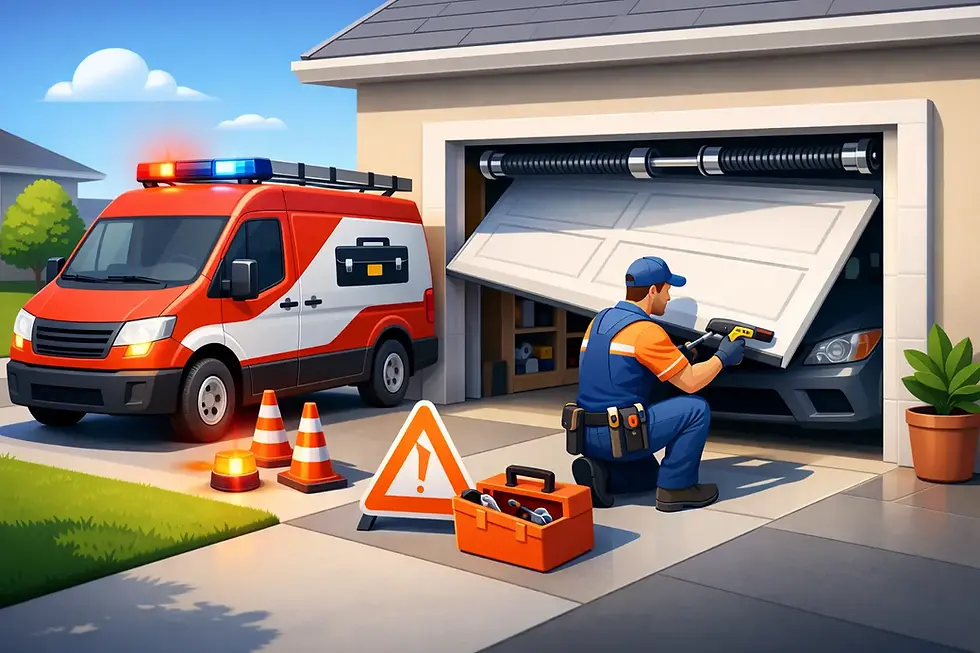
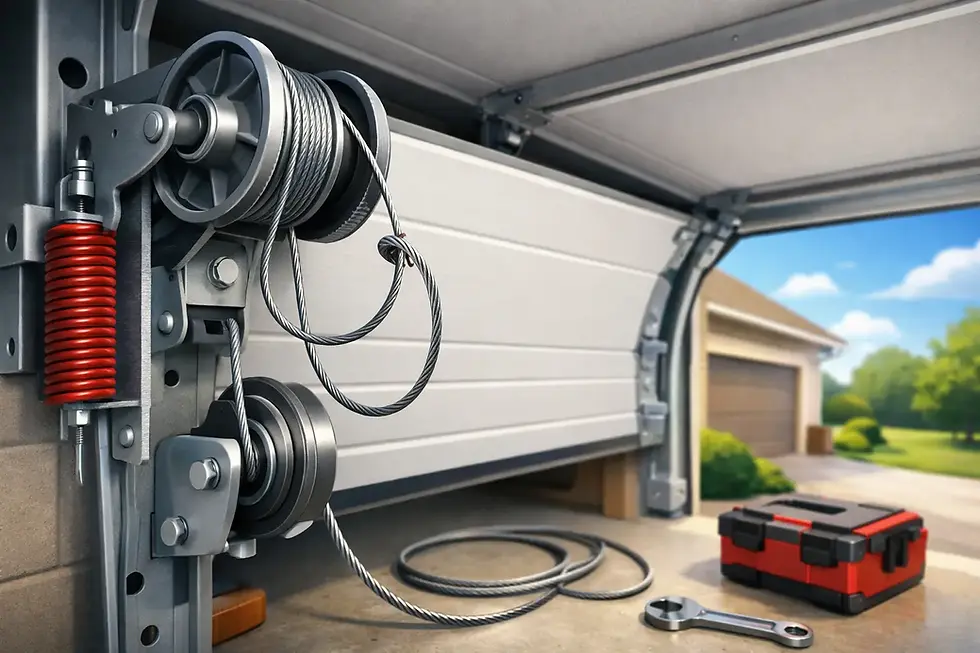
A visible gap in a torsion spring above the garage door is a common sign of a break. Extension springs, usually located along the horizontal tracks, may look stretched, loose, or damaged. Do not touch either type to check it. The tension stored in a garage spring can cause serious injury if it releases unexpectedly.
A door that is suddenly heavy is one of the clearest signals. If you disconnect the opener using the emergency release and the door is difficult to lift manually, stop using it and arrange service. Do not force the opener to do work the springs are supposed to handle. That can burn out the motor, damage gears, bend hardware, or create a larger repair.
Replace Both Springs or Only the Broken One?
Many residential garage doors use two torsion springs. If one breaks, homeowners often wonder whether the other one can remain in place. It depends on the condition, age, and cycle rating of the remaining spring, but replacing both is often the practical recommendation when they were installed at the same time.
Paired springs typically experience the same number of cycles. When one reaches the end of its service life, the other may not be far behind. Replacing both at once can restore balanced lifting force and help prevent another inconvenient breakdown shortly afterward.
There are exceptions. If one spring was replaced recently and the other is much newer or clearly in good condition, a technician may recommend replacing only the failed component. The right decision should be based on the door’s weight, spring measurements, hardware condition, and the overall system - not a one-size-fits-all rule.
Why Spring Replacement Is Not a DIY Job
Garage door springs are small compared with the door they lift, but they hold enough stored energy to cause severe injuries and property damage. Torsion springs require specialized winding tools, proper sizing, precise installation, and careful tension adjustment. Extension springs also need correct safety cables and secure hardware.
Online videos can make the work look simple, but they rarely account for differences in door size, spring configuration, shaft condition, cable placement, and existing damage. Installing the wrong spring can make the door too heavy, too forceful, or uneven. A door that appears to work after a DIY repair may still be unsafe.
Professional spring service involves more than removing a broken part. A qualified technician checks the door balance, cables, drums, rollers, tracks, bearings, brackets, and opener operation. This helps identify problems that may have contributed to the failure or could cause another issue soon after the repair.
If the door is stuck open, do not leave it unattended if you can avoid it. Keep children and pets away from the area, do not park beneath the door, and avoid pulling on the cables or spring components. If the door is stuck closed, use another entrance rather than repeatedly trying the opener.
How to Help New Springs Last Longer
You cannot prevent every spring failure, but basic maintenance can reduce unnecessary strain. Keep the tracks and rollers free of debris, and have the door inspected when it begins making new noises or moving unevenly. A technician can lubricate appropriate moving parts, check balance, tighten loose hardware, and identify worn rollers or cables before they affect the springs.
Avoid treating an unusual sound as something that will work itself out. Squeaking, grinding, popping, or straining may come from rollers, hinges, bearings, or the opener, but each can make the door operate less smoothly. The longer a door runs out of balance, the more stress it places on springs and other components.
It also helps to choose springs matched to your door and household use. A busy family that uses the garage as the main entry may benefit from higher-cycle springs. They can cost more upfront, but the longer service life may be worthwhile for a frequently used door.
What to Expect From Professional Spring Service
A reliable garage door technician should begin by identifying the cause of the problem rather than simply replacing a part. The spring type and size must match the exact weight and design of your door. Once the correct springs are installed, the technician should test door balance and confirm that the opener can lift and close the door without excessive strain.
You should also receive a clear explanation of what failed, what was replaced, and whether any other components need attention now or later. For homeowners in Tampa, Hillsborough, Pasco, and Pinellas counties, fast service matters when a broken spring interrupts work, school drop-offs, or access to the garage. Supreme Garage Door LLC provides residential spring replacement and emergency support with straightforward communication and free estimates.
Do not wait for a worn spring to turn into a door that will not move. If your garage door is heavy, uneven, noisy, or suddenly unresponsive, stop using it and have it checked. A timely inspection can protect your opener, your schedule, and the people who use your garage every day.

Comments