
Garage Door Emergency Service Lutz Can Count On
- LADE TECH

- 3 days ago
- 6 min read
A garage door that will not close at bedtime, opens only halfway before work, or hangs crooked in the tracks is more than an inconvenience. It can leave your home exposed, trap your vehicle inside, and create a real safety risk around children and pets. When you need garage door emergency service Lutz homeowners can depend on, the first priority is protecting people and property until a qualified technician can make the repair.
Garage doors are heavy systems with tightly wound springs, moving cables, rollers, and an opener working together. A small-looking problem can quickly become a damaged door, a burned-out opener, or an unsafe situation if the door is forced. Knowing what to do in the first few minutes can prevent further damage and help get your day back on track.
When a Garage Door Problem Is an Emergency
Not every garage door issue needs immediate service, but some should not wait until a more convenient day. If the door is stuck open and you cannot secure the home, prompt help is warranted. The same is true when a door is off track, has fallen unevenly, or will not stay open or closed.
A loud bang followed by a door that suddenly feels extremely heavy is often a broken spring. You may still hear the opener motor running, but the door may only lift a few inches or refuse to move at all. Do not keep pressing the remote in hopes that it will work. The opener is not designed to lift the full weight of the door without spring support, and repeated attempts can damage its internal components.
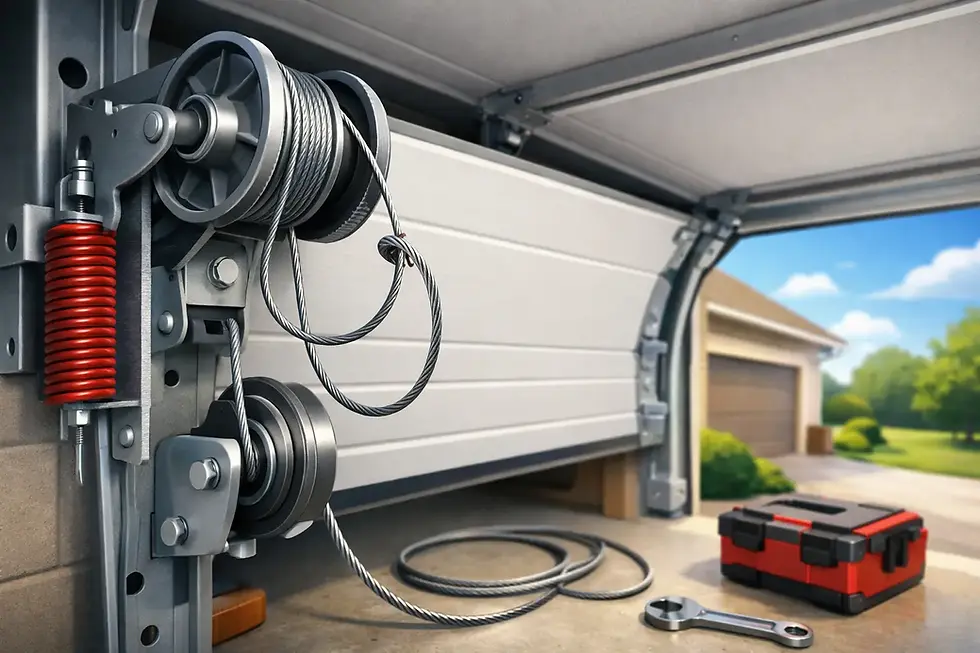
A snapped or loose cable is another urgent concern. Cables work under tension and help keep the door balanced during travel. If one cable slips off a drum or breaks, the door can rise unevenly, bind in the tracks, or drop unexpectedly. Leave it where it is and keep everyone clear of the area.
You should also call for emergency help if a vehicle is trapped inside and the door cannot be safely operated, if the door has been struck by a car, or if the bottom section has separated from the track. In these situations, trying a quick fix can turn a repair into a replacement.
What to Do Before Garage Door Emergency Service Arrives
Start by keeping people away from the garage door. Do not let children, pets, or visitors walk beneath a door that is partially open or leaning. If a spring, cable, roller, or track has failed, the door may not be stable even if it appears to be holding in place.
If the door is stuck open, avoid pulling it down by hand unless you are certain it is properly balanced and can be lowered without force. A door with a broken spring can be much heavier than expected. If you must leave the property, secure the door only if it can be done safely. For example, a locked interior door between the garage and home can provide an added layer of security while you wait for service.
Stop using the opener if the door is binding, crooked, or making grinding noises. You can unplug the opener to prevent accidental use by another household member. Do not pull the emergency release cord on a door that is open, damaged, or visibly out of alignment. Releasing the opener may allow a heavy door to fall.
It helps to take a few clear photos from a safe distance. A photo of a broken spring, loose cable, bent track, or damaged panel can help explain the issue when you call. Still, do not climb a ladder or place your hands near springs, cables, hinges, or tracks to get a closer look.
A Few Safe Checks Homeowners Can Make
Some basic observations are useful, as long as the door remains untouched. Check whether the opener has power, whether the wall button responds, and whether anything is blocking the photo-eye sensors near the bottom of the tracks. Dirt, leaves, or an object in the sensor path can prevent a door from closing.
If the opener light is flashing and the door reverses before reaching the floor, clean the sensor lenses gently and confirm they are facing each other. This is one of the few issues that may have a simple solution. If the door still will not close, or if the sensors are damaged, call for service rather than bypassing the safety system.
Common Emergency Garage Door Repairs
The repair depends on the failed part and the condition of the rest of the system. An experienced residential technician should inspect the complete door, not just the most visible problem. A broken spring, for example, can place extra stress on rollers, bearings, cables, and the opener.
Broken Springs
Torsion and extension springs counterbalance the door's weight. When a spring breaks, the door may become too heavy to lift manually or with the opener. Spring replacement requires the right parts, tools, and training because stored spring tension can cause serious injury. This is not a DIY repair.
Thrown or Broken Cables
A cable can come off when the door runs into an obstruction, a spring fails, or the door becomes misaligned. The technician will determine why it happened, reset or replace the cable as needed, and check the drums, tracks, rollers, and spring balance before operating the door again.
Off-Track Doors and Damaged Rollers
Worn rollers, loose hardware, bent tracks, or an impact can push a door out of alignment. An off-track door should never be forced with the opener. Repairs may include carefully setting the door back into position, replacing worn rollers, correcting track alignment, and testing travel from top to bottom.
Opener Failure
Sometimes the door itself is in good condition but the opener will not run, reverses unexpectedly, or hums without moving the door. The cause might be a worn gear, stripped drive component, faulty logic board, failed capacitor, or an issue with the safety sensors. A proper inspection separates an opener problem from a balance or door hardware problem, which matters because replacing an opener will not solve a broken spring or binding track.
Why Forcing the Door Usually Makes Things Worse
It is understandable to want the garage open immediately when you need to get to work, pick up a child, or secure the house. But using the opener repeatedly, lifting with too much force, or pulling on a cable can multiply the damage. A door that needs a spring replacement may end up with a damaged opener rail, bent panels, or broken hinges.
There are exceptions. If the issue is clearly a blocked photo-eye sensor or a dead remote battery, a simple correction may restore operation. But if the door is heavy, uneven, noisy, rubbing the track, or stopped mid-cycle, stop using it. The cost and risk of forcing it are rarely worth it.
Choosing an Emergency Garage Door Company in Lutz
When your garage door fails after hours, clear communication matters as much as a quick response. Look for a local residential company that explains what is wrong, provides an estimate before work begins, and does not pressure you into replacing parts that are still in good condition.
Ask whether the technician can address the full issue during the visit, including springs, cables, rollers, opener problems, and track concerns. A complete repair should include testing the door's balance, travel limits, safety reversal, and photo-eye operation. The door should open and close smoothly before the job is considered finished.
Supreme Garage Door LLC provides 24/7 emergency support for homeowners who need practical, dependable help with urgent garage door problems. Free estimates and English- and Spanish-speaking service help make a stressful situation easier to manage.
Preventing the Next Late-Night Garage Door Failure
Emergency repairs are not always avoidable. Springs eventually wear out, and an accidental impact can happen without warning. Regular maintenance can still catch many developing problems before they stop the door completely.
Pay attention to new squeaks, grinding, jerky movement, slow travel, and a door that no longer closes evenly. These are often early signs of worn rollers, loose hardware, track issues, or an opener that needs adjustment. A professional maintenance visit can include lubrication of appropriate moving parts, hardware inspection, balance testing, roller checks, and safety sensor testing.
If your garage door is open, crooked, heavy, or unable to secure your home, treat the system with caution. Keep the area clear, stop operating the opener, and arrange professional help. A timely repair protects your home, your vehicle, and the people who rely on that door every day.


Comments