
What Causes Garage Door Cable to Slip at Home?
- LADE TECH

- Aug 17
- 5 min read
A garage door cable that slips off its drum can turn a normal morning into a problem fast. The door may hang crooked, stop halfway, make a sharp bang, or refuse to move at all. If you are asking what causes garage door cable to slip, the short answer is that the door has lost proper tension or alignment somewhere in its lifting system. Because the cables work alongside high-tension springs, this is not a repair to force or test repeatedly.
A slipped cable is often called a thrown cable. It can happen suddenly, but the underlying issue may have been developing for weeks. Catching the warning signs early can help prevent a door from becoming stuck open, closed, or dangerously uneven.
What Causes Garage Door Cable to Slip?
Garage door cables run from the bottom corners of the door to drums near the top of the opening. As the door opens, the cable winds onto the drum. As it closes, the cable unwinds while remaining tight. When the cable loses tension, comes off the drum, or catches in the wrong spot, the entire door can become unbalanced.
A broken garage door spring
A broken torsion spring is one of the most common reasons a cable slips. The spring supplies the lifting force that keeps the cables tight. When it breaks, one or both cables can suddenly go slack and jump off the drum.
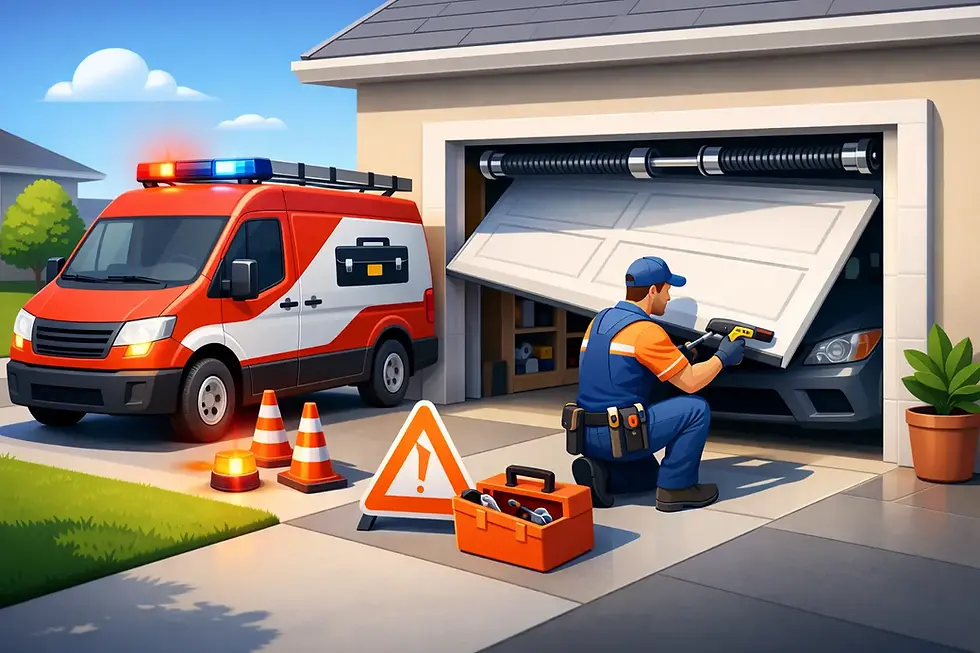
Homeowners often hear a loud pop from the garage when a spring breaks. The door may then feel extremely heavy, lift only a few inches, or sit unevenly in the opening. Do not try to operate the opener repeatedly if you suspect a broken spring. The opener is not designed to lift the full weight of the door without spring support.
The door closed on an object
A trash can, tool, bike, toy, or even a small piece of lumber in the doorway can stop one side of the door before the other. As the opener continues trying to close the door, the door can twist. That uneven movement may allow a cable to loosen and come off its drum.
This is especially common when the obstruction is near one corner. Even a low-profile object can create enough resistance to affect the cable system. Check the doorway before every close cycle, particularly in busy family garages.
Worn rollers, bent tracks, or a door that binds
The cable is often the visible problem, but it may not be the original problem. Worn rollers, damaged hinges, bent tracks, or debris in the track can prevent the door from moving smoothly. When one side binds more than the other, the door can rack or twist as it travels.
That twisting changes cable tension. Over time, the cable may begin winding unevenly on the drum until it slips off. A door that shakes, scrapes, jerks, or gets louder during operation should be inspected before a cable comes loose.
Loose or damaged bottom brackets
The bottom bracket is where the lifting cable attaches to the lower corner of the door. If that bracket is bent, loose, corroded, or damaged by an impact, the cable may not stay seated properly.
This component deserves special caution. Bottom brackets are connected directly to the cable and spring tension. Removing or loosening them while the system is under tension can cause serious injury. A qualified garage door technician should handle bottom bracket and cable repairs.
Frayed, stretched, or improperly wound cables
Garage door cables can wear out from age, moisture, friction, and normal use. Fraying, rust, flattened spots, or visible kinks can keep the cable from tracking cleanly on the drum. A stretched cable can also lose its proper tension.
In the Tampa area, humidity and coastal air can speed up corrosion, especially in garages that are not fully enclosed. A cable may look mostly intact from a distance while rust has weakened individual strands. If you see broken wire strands or rust buildup, stop using the door and schedule service.
An unlevel door or uneven spring tension
A properly working garage door should rise and lower evenly. If one cable has more tension than the other, or if the springs are not correctly balanced, one side of the door can move ahead of the other. The cable on the faster side may wrap incorrectly or slip.
This can happen after an incorrect repair, a spring replacement that was not properly adjusted, or gradual wear in the door system. It can also happen when a door has been hit by a vehicle or shifted because of a damaged track. The fix is not simply putting the cable back on. The technician needs to find and correct the condition that caused the imbalance.
Opener settings or force-related problems
An opener that pushes or pulls with excessive force can contribute to cable trouble, particularly if the door is already binding. Incorrect travel limits may cause the door to travel too far, while force settings that are too high can make the opener keep working against resistance.
That said, an opener is rarely the only cause. A healthy, balanced door should move smoothly with the opener disconnected. If the door is heavy, uneven, or difficult to move by hand, the door hardware needs attention before opener adjustments are made.
Signs Your Garage Door Cable May Be Slipping
A cable does not always come completely off at once. It may begin wrapping unevenly, rubbing against other parts, or showing slack on one side before a full failure occurs. Pay attention if your garage door starts moving crookedly, leaves a gap on one side when closed, or makes popping and grinding noises.
You may also notice that one cable appears loose while the other is tight, or that the door stops and reverses without a clear obstruction. If the cable is visibly off the drum, do not run the opener to see whether it will correct itself. That can bend tracks, damage panels, or pull the door farther out of alignment.
What to Do When a Cable Comes Off
Start by keeping people, pets, and vehicles clear of the door. If the door is partly open or hanging unevenly, do not walk beneath it. Avoid pulling on the cable, loosening hardware, or attempting to reset the cable drum yourself.
If it is safe to do so, disconnect power to the garage door opener so no one accidentally activates it. Leave the door in its current position rather than trying to force it shut or open. A heavy door with a slipped cable can shift unexpectedly.
A professional repair typically involves securing the door, inspecting the springs, drums, cables, rollers, tracks, and bottom brackets, then restoring proper cable tension. The technician should also test the door balance and opener operation after the repair. Reinstalling a cable without addressing a broken spring, damaged roller, or bent track is likely to lead to the same problem again.
Can You Prevent a Garage Door Cable From Slipping?
Regular maintenance makes a meaningful difference. Keep the tracks clear of dirt and stored items, and listen for new noises during normal operation. Look over the cables periodically from a safe distance for fraying, rust, or slack. Do not apply lubricant directly to the cables or tracks, since excess lubricant can collect debris and create other operating issues.
A yearly professional tune-up is a practical way to catch worn rollers, loose hardware, weak springs, and balance problems before they lead to a thrown cable. This is particularly useful for doors that open several times a day or face Florida heat, humidity, and seasonal storms.
For homeowners in Tampa and surrounding Hillsborough, Pasco, and Pinellas County communities, a door that is crooked, stuck, or showing a loose cable is a good reason to request prompt service. Supreme Garage Door LLC can inspect the full system, explain the cause clearly, and provide a repair recommendation before work begins.
A slipped cable is not just an inconvenience. It is your garage door telling you that something is no longer moving as it should. Treat the warning seriously, keep the door out of use, and have the underlying problem corrected so your door can return to safe, dependable operation.

Comments