
How to Spot Frayed Garage Cables Before They Fail
- LADE TECH

- Jul 12
- 5 min read
A garage door can look normal from the driveway while one worn cable is doing the work of holding back a much bigger problem. Knowing how to spot frayed garage cables gives you a chance to schedule a repair before the door becomes crooked, jams in the opening, or drops unexpectedly. Because cables work alongside high-tension springs, early attention is the safest and least disruptive approach.
Garage door cables are not a DIY adjustment item. A cable that is fraying, loose, or off its drum can be connected to a system under significant tension. Homeowners can safely look for warning signs, stop using the door when something looks wrong, and call a qualified technician for the repair.
What Garage Door Cables Do
Most residential garage doors use lift cables to raise and lower the door evenly. On a standard torsion-spring system, a cable runs from the bottom bracket near the lower corner of the door up to a drum above the opening. As the door moves, the cable winds and unwinds around that drum.
When both cables are in good condition and properly aligned, the door stays level through its travel. If one cable weakens or slips, the door may lift unevenly. That puts added strain on the opener, rollers, tracks, springs, and door panels.
In Tampa, moisture, salt air in coastal areas, normal wear, and occasional water exposure in the garage can all contribute to cable corrosion over time. Cables do not always fail without warning, but the signs are easy to miss when the door is used every day.
How to Spot Frayed Garage Cables Safely
Start with the garage door fully closed. Do not inspect cables while the door is moving, and keep hands away from the bottom brackets, cable drums, springs, and any cable that appears loose. Those components can move suddenly under tension.
Stand a few feet back and look at both sides of the door. The cables should appear straight, evenly tensioned, and seated in their proper path. You may need a flashlight to see the sections near the bottom brackets or above the tracks.
Fraying usually looks like thin individual wire strands separating from the main cable. The cable may look fuzzy in one spot, have a small wire loop sticking outward, or appear thinner and rougher than the cable on the other side. Do not touch exposed strands. They can be sharp, and pulling on the cable can make the problem worse.
Also look for rust or discoloration. Surface rust does not always mean the cable is immediately unsafe, but rust combined with broken strands, kinks, or uneven door movement calls for prompt service. A cable can weaken from the inside even when the visible damage seems small.
Check the Bottom Corners and Cable Drums
The lower portion of each cable is a common place for damage. Dirt, moisture, and repeated movement can wear the cable where it attaches at the bottom bracket. Look for strands separating near the attachment point, but do not loosen or remove the bracket. The bottom bracket is under spring tension and should only be handled by a trained technician.
Next, look above the door at the cable drums if they are visible. A healthy cable should wrap neatly in the grooves. If it is piled up, crossed over itself, hanging loose, or coming off the drum, stop operating the door. This is often called a thrown cable, and continuing to run the opener can pull the door out of alignment.
Warning Signs You May Notice Before You See Fraying
Sometimes the cable damage is hidden behind the track, near the drum, or inside a tight coil. The door's behavior can reveal a problem before the frayed section is obvious.
Pay attention if your garage door:
Rises unevenly, with one side higher than the other
Jerks, shakes, or makes scraping and popping sounds during travel
Stops partway, reverses, or appears stuck on one side
Leaves a loose cable hanging near a track or above the door
Has an opener that strains, hums, or cannot lift the door normally
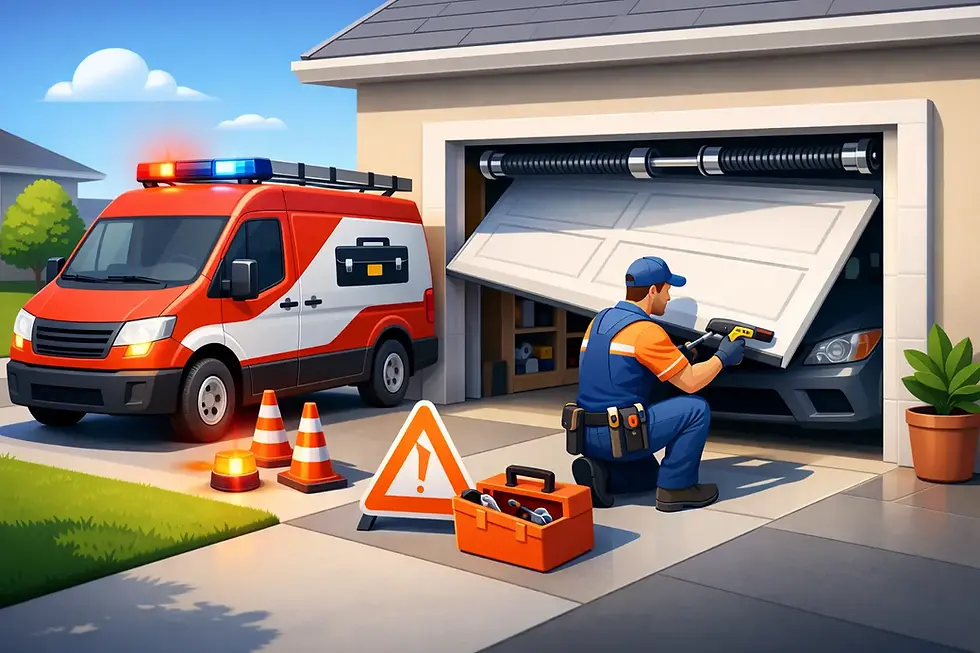
A crooked door should be treated as a stop-use situation. Trying to force it open with the wall button, remote, or emergency release can cause more damage. The door can bind in the tracks, bend a panel, or put extra stress on the remaining cable and spring system.
Fraying, Kinking, and a Thrown Cable Are Different Problems
These issues can look similar from a distance, but they are not exactly the same. A frayed cable has broken wire strands and is losing structural strength. It needs replacement, even if the door is still operating.
A kinked cable may not have visible broken strands yet, but it has been bent or pinched in a way that prevents it from winding smoothly. Kinks often develop after a door binds, gets hit, or runs with a damaged roller or track issue. The cable may need replacement because its shape and strength have been compromised.
A thrown cable has slipped off the drum. It may still look intact, but the door is no longer lifting evenly. This problem requires professional resetting and a check for the cause, such as a broken spring, worn roller, obstructed track, or door that was lifted while out of balance.
When to Stop Using the Garage Door
A few broken strands are not something to monitor for another month. Cable damage tends to progress quickly once individual wires have started to fail. The remaining strands carry more load each time the door moves.
Stop using the door and arrange service if you see fraying, a loose or off-track cable, a crooked door, or a cable wrapped improperly around the drum. If the door is open and appears unstable, keep people, vehicles, and pets clear of the opening. Do not stand beneath the door or attempt to pull it closed by hand.
If you must secure the home, use another entry point when possible and let a professional assess the door. This is especially true if a spring is broken or the cable has come off one side. Garage doors are heavy, and the spring-and-cable system is designed to control that weight safely only when every component is working together.
Why Cables Fray or Come Off
Normal wear is the most common cause. Every open-and-close cycle places stress on the cable, particularly where it bends around the drum. Over years of use, small wire failures can turn into visible fraying.
Other problems can speed up the wear. Worn rollers can make the door drag in the tracks. A damaged track can cause the door to bind. A broken spring can leave the cable loose and allow it to slip from the drum. An opener that is pushing a poorly balanced door may also add strain throughout the system.
That is why replacing a cable alone is not always the full repair. A dependable technician should inspect the springs, drums, rollers, tracks, bottom brackets, and door balance before returning the door to service. Fixing the cause helps prevent the replacement cable from suffering the same damage.
A Safe Maintenance Habit for Homeowners
A quick visual check every few months can help catch cable wear early. With the door closed, look over the visible cables, rollers, hinges, and tracks while you are already checking your garage for routine maintenance. Listen for new noises when the door operates, and notice whether it opens smoothly and stays level.
Avoid spraying heavy lubricant directly on the cables. Lubricant can collect dirt and make damage harder to see. Garage door springs, rollers, hinges, and other moving parts may need the correct garage-door-rated lubricant, but cable service and tension adjustments should be left to a professional.
If you find a frayed cable in Tampa or nearby Hillsborough, Pasco, or Pinellas County, Supreme Garage Door LLC can inspect the full system and explain what is needed before work begins. A cable issue is easier to handle when it is caught early, before a routine trip out of the garage turns into a door that will not move safely.

Comments