
Homeowner Guide to Garage Springs
- LADE TECH

- Jun 25
- 6 min read
You usually notice garage springs at the worst possible time - when the door suddenly feels too heavy, stops halfway, or slams shut harder than it should. This homeowner guide to garage springs is meant to help you understand what is happening, what is dangerous, and what you can safely check before calling for service.
For most homeowners, springs are out of sight and out of mind until the garage door stops working the way it should. But those springs do the hard work every day. They carry the door’s weight, help it open smoothly, and keep the system balanced. When a spring wears out or breaks, the whole door can become unsafe fast.
Why garage springs matter more than most homeowners realize
A garage door may look simple from the outside, but it is a heavy moving system with parts under serious tension. The springs are what make that weight manageable. Without them, even a standard residential door can feel almost impossible to lift by hand.
That is why spring problems affect more than convenience. They can keep your car trapped inside, leave your home unsecured, or put strain on the opener until another part fails too. In many cases, what starts as a spring issue can turn into worn rollers, damaged cables, or opener problems if it is ignored.
The two main types in this homeowner guide to garage springs
Most residential garage doors use either torsion springs or extension springs. The difference matters because they wear differently, fail differently, and are serviced differently.
Torsion springs
Torsion springs are mounted above the garage door opening on a metal shaft. As the door closes, the springs wind up and store energy. As the door opens, that energy is released to help lift the door.
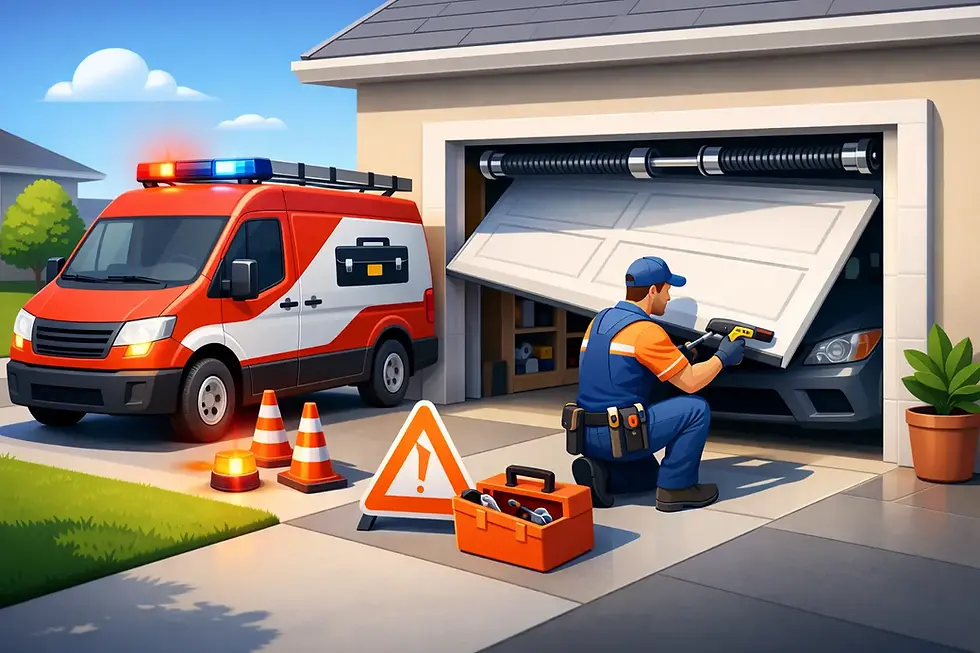
These are common on newer systems and are generally more controlled and durable than extension springs. When they break, you may hear a loud bang from the garage that sounds like something hit the wall. In reality, the spring has snapped under tension.
Extension springs
Extension springs are usually installed along the horizontal tracks on both sides of the door. They stretch and contract as the door moves.
You may still see them on older garage doors. They can work well, but they have more exposed movement and more components involved. If the system is older or missing safety cables, extension spring issues can become more hazardous.
Signs your garage springs may be failing
Spring failure is not always sudden. Sometimes the warning signs build over weeks or months.
One common sign is a garage door that feels unusually heavy when you try to lift it manually. Another is a door that opens a few inches and stops, or one that struggles and reverses. You may also notice jerky movement, a crooked door, or gaps in a torsion spring where the coil has separated.
Listen to the door too. Squeaking alone does not always mean a spring problem, since rollers and hinges can make noise as well. But loud popping, snapping, or straining sounds should not be ignored.
If the opener seems to be working harder than usual, that can also point to a spring issue. Many homeowners assume the opener is the main lifting force. It is not. The opener guides the motion, but the springs carry most of the weight. If a spring weakens, the opener ends up compensating for a job it was not built to do.
What homeowners can safely check
There are a few things you can observe without putting yourself at risk. The key word is observe. Springs are not a good do-it-yourself repair for most homeowners.
Start with the door in a closed position. Look for obvious damage such as a visible break in the spring, stretched or hanging components, loose cables, or a door sitting unevenly. If you have a torsion spring, a clear gap in the coil usually means it has broken.
You can also pay attention to how the door behaves during normal use. Does it hesitate, slam, or get stuck? Does the opener sound strained? Does the door look crooked as it moves? Those details help narrow down the problem.
If you disconnect the opener using the emergency release, only do so when the door is fully closed and stable. A door with a broken spring can drop quickly if it is open or partly open. Once disconnected, do not force the door if it feels too heavy. That is one of the clearest signs the balance is off.
What not to do with garage springs
The biggest mistake homeowners make is underestimating the tension involved. Garage springs are not like ordinary hardware-store springs. They are tightly wound or stretched components designed to move a very heavy door.
Do not try to adjust torsion springs with improvised tools. Do not loosen cones, remove brackets, or detach cables unless you have the right training and equipment. Even a simple-looking adjustment can cause a sudden release of force.
It is also a mistake to keep using the opener when the door is not balanced. That can burn out the motor, damage the rail, or bend sections of the door. A spring problem is rarely something that improves on its own.
When repair is possible and when replacement makes more sense
In most cases, a broken spring is replaced, not repaired. Springs wear out through cycles, which means one full open and one full close counts as a single use. Over time, the metal fatigues.
If one spring breaks on a two-spring system, many professionals recommend replacing both. That is not an upsell in many situations. If one spring has reached the end of its lifespan, the second is often close behind. Replacing only one can leave the door unevenly balanced and may lead to another service call sooner than expected.
There are trade-offs, though. If the second spring is newer because of a prior repair, replacing only the failed spring may still make sense. The right answer depends on the age of the system, the type of springs, and how evenly the door is currently balanced.
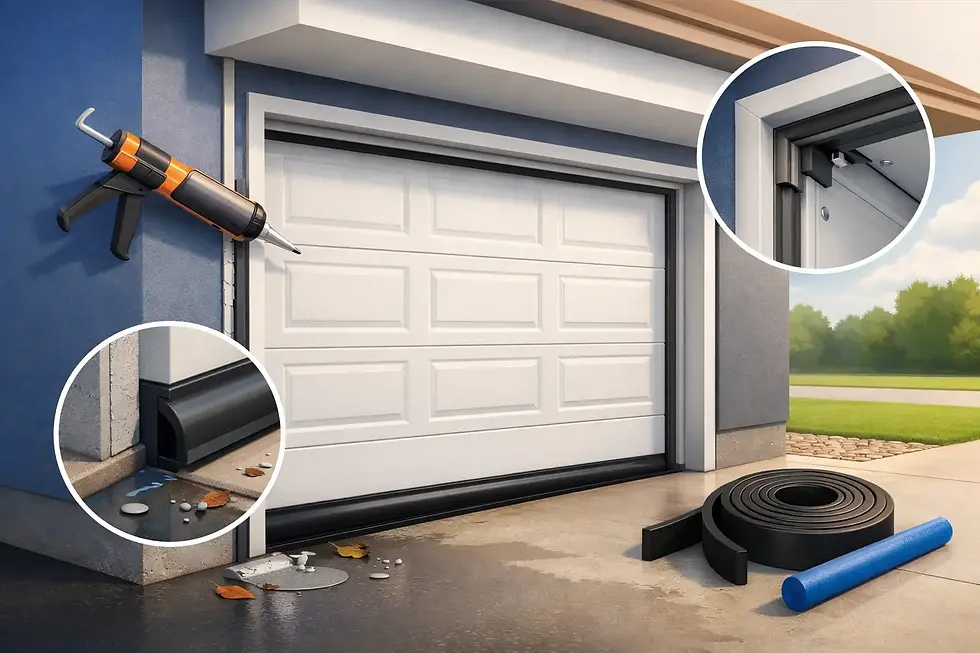
This is also the time to look at related wear items. Rollers, cables, bearings, and bottom seals may not need immediate replacement, but they should be checked. A spring job is often when hidden wear becomes easier to spot.
Why Florida homeowners should pay attention to wear and corrosion
In the Tampa area and nearby communities, humidity can be hard on garage door components over time. Metal parts do not fail only from use. Moisture and corrosion can shorten their lifespan too, especially in garages that are not climate controlled.
That does not mean every spring issue is caused by weather, but local conditions can add stress to the system. If your garage door sees frequent daily use and your hardware already shows signs of rust, regular inspection matters more.
What professional spring service should include
A proper spring service visit should be about more than swapping one part and leaving. The technician should confirm the correct spring size and weight rating for your specific door. Installing the wrong spring can create balance problems right away, even if the door appears to work at first.
The full system should also be checked for cable condition, bracket stability, roller wear, and opener strain. After the new springs are installed, the door should be balanced and tested by hand and with the opener.
For homeowners, clear communication matters just as much. You should understand what failed, what was replaced, and whether any other parts are near the end of their service life. Reliable service is not just about speed. It is about fixing the problem without leaving you guessing.
A few practical ways to help springs last longer
You cannot stop springs from wearing out forever, but you can avoid extra strain. If the door starts sounding rough, do not wait months to have it checked. A dragging roller or misaligned track can put added stress on the spring system.
Regular maintenance helps too. That means inspecting the system, lubricating appropriate moving parts, and checking door balance before small problems turn into expensive ones. For busy homeowners, a periodic professional tune-up is often the easiest way to stay ahead of emergency breakdowns.
If your garage door is your main entry point, spring health matters even more. A front door issue is frustrating. A garage door that will not open when you are late for work or trying to get kids out the door becomes a much bigger disruption.
A garage spring problem usually feels urgent because it is. The safest move is to stop using the door if it seems heavy, uneven, or unstable, then have it checked by a qualified residential garage door professional. A fast repair protects your door, your opener, and most importantly, the people using it every day.

Comments