
Can a Snapped Garage Cable Be Fixed?
- LADE TECH

- Jul 5
- 6 min read
A garage door that suddenly drops crooked, jams halfway, or makes a sharp snapping sound usually points to one thing fast: cable trouble. If you're asking, can a snapped garage cable be fixed, the short answer is usually no - not in the way most homeowners hope. In most cases, a snapped cable needs to be replaced, and the full door system needs to be checked before the door is used again.
That answer matters because garage door cables are not minor parts. They work under high tension and help lift and lower a very heavy door in a controlled way. When one fails, the problem is not just inconvenience. It is a safety issue.
Can a snapped garage cable be fixed or repaired?
Technically, a damaged cable might look like something that could be tied, clamped, or patched. In practice, that is not a safe or lasting repair. Once a garage door cable has snapped, frayed badly, or pulled apart at the end fitting, it has lost the strength the system depends on.
A proper repair usually means replacing the broken cable with the correct new cable for that specific door setup. That may also include resetting cable drums, checking spring tension, inspecting brackets and rollers, and making sure the door is balanced before it goes back into service.
So if the question is whether the original cable itself can be fixed and reused, the answer is generally no. If the question is whether the overall garage door problem can be fixed, yes - but it should be done by replacing the failed part, not patching it.
Why a snapped cable is a bigger problem than it looks
Garage door cables do not usually fail on their own for no reason. They often break because of age, rust, wear, poor alignment, damaged rollers, or spring issues. Sometimes the cable comes off the drum first, then frays, then finally snaps. Other times a broken spring puts sudden stress on the cable and causes it to fail at the same time.
That is why replacing only what is visibly broken without checking the rest of the system can lead to another failure soon after. A cable problem is often connected to something else.
For homeowners, the main risk is trying to force the door open or closed after the cable breaks. If one side is unsupported, the door can go uneven, bind in the track, or slam down. Automatic openers can also be damaged if they keep trying to move a door that is no longer balanced.
Signs your garage cable has snapped
Sometimes the break is obvious. You may see a loose cable hanging near the side of the door, or wrapped awkwardly around the drum. In other cases, the symptoms show up before you ever spot the cable.
A door with a snapped cable often looks crooked when opening. It may lift a few inches on one side and stay down on the other. You might hear grinding, popping, or straining from the opener. The door may also feel unusually heavy if you try to lift it manually.
Fraying is another warning sign that should not be ignored. If the cable strands are separating, rusted, or kinked, the cable is already weakening. At that point, replacement is usually the safe call before it fails completely.
What causes garage door cables to snap?
Normal wear is the most common reason. Every time the door opens and closes, the cable takes on load. Over the years, those cycles add up. In Florida, humidity can also speed up corrosion, especially in garages that are not climate controlled.
Poor maintenance is another factor. Dirt buildup in tracks, worn rollers, and loose hardware can make the door move unevenly, which adds stress to cables. Improper spring tension can do the same thing. If the springs are not doing their share of the lifting, the cables can be forced to carry more than they should.
There are also installation issues. Using the wrong cable size, mismatched parts, or incorrect drum setup can shorten cable life. That is one reason homeowners often see repeat problems after a quick fix that did not address the full system.
Can you open the garage door if the cable is snapped?
Maybe, but it is usually a bad idea.
If one cable has snapped and the other is still under tension, the door is unstable. Trying to open it can twist the panels, bend tracks, pull rollers out, or cause the door to fall. Even if the opener manages to move it, that does not mean it is safe.
If your car is trapped inside, it is tempting to try anyway. But this is one of those situations where waiting for a trained technician is usually the cheaper option in the long run. A cable replacement is one repair. A dropped door, damaged opener, and bent track turn it into several.
Why DIY cable repair is risky
Homeowners are often comfortable replacing weather seal, tightening hardware, or lubricating rollers. A snapped cable is different because it involves stored spring tension. Whether your door uses torsion springs or extension springs, the cable system is tied directly to components that can cause serious injury if handled incorrectly.
The danger is not just the cable itself. It is the force behind it.
Trying to splice a cable, reconnect it without the right tools, or reset it on the drum without correcting spring tension can make the door even less stable. It may look fine for a moment and then fail under load. That is why professional garage door companies replace cables with the correct parts and test the door balance before finishing the job.
What a professional repair usually includes
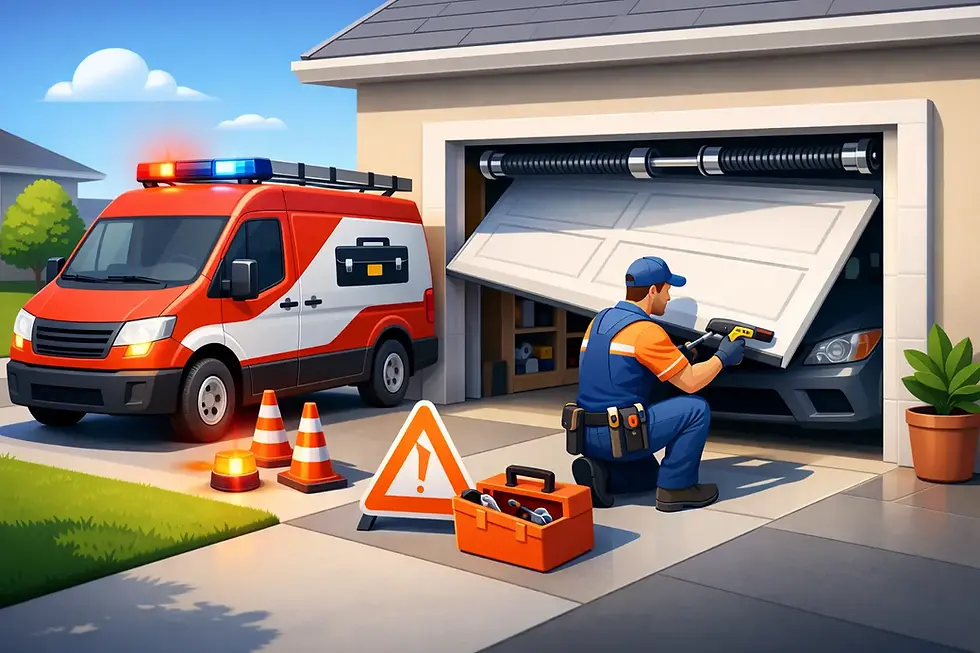
When a technician handles a snapped cable properly, the job is about more than swapping one part. First, the door is secured so it cannot shift or fall during service. Then the damaged cable is removed and the matching replacement is installed.
After that, the rest of the system should be inspected. That includes the springs, drums, rollers, tracks, bottom brackets, and opener connection if applicable. If the cable snapped because of another issue, that root cause needs to be corrected too.
Once repairs are made, the door should be tested for smooth travel and proper balance. A balanced door protects the opener and helps prevent another cable problem soon after.
How long do garage door cables last?
There is no perfect timeline because cable life depends on door weight, usage, climate, and maintenance. A door used several times a day will wear parts faster than one used occasionally. Exposure to moisture and salt air can also shorten lifespan.
For many homeowners, the first visible clue is fraying or rust rather than a clean snap. That is actually helpful. Catching cable wear early can prevent the more urgent situation where the door becomes stuck or unsafe without warning.
Routine garage door maintenance gives technicians a chance to spot that wear before it becomes a breakdown. For busy homeowners, that kind of preventive service is often easier than dealing with an emergency when the door will not open before work or school.
When replacement is urgent
Some cable problems can wait a day or two if the door is left untouched and secured. Others need same-day attention.
If the door is hanging unevenly, stuck partially open, making loud strain noises, or has come off track, treat it as urgent. The same goes for a snapped cable combined with a broken spring. In those cases, continued use can be dangerous and cause more damage fast.
For homeowners in the Tampa area, this is the kind of issue where fast local service really matters. A door that will not close safely or will not open when you need your vehicle is not a problem most families can put off for long.
The practical answer homeowners need
Can a snapped garage cable be fixed? Yes, the problem can be fixed, but the cable itself should generally be replaced, not patched. That is the safe, dependable repair.
If your garage door cable has snapped, stop using the door, keep people clear of it, and have the full system inspected. The right repair is not just about getting the door moving again. It is about making sure it moves safely the next time, too.
A good garage door repair should leave you with more than a working door. It should leave you with confidence that the problem was handled the right way.

Comments