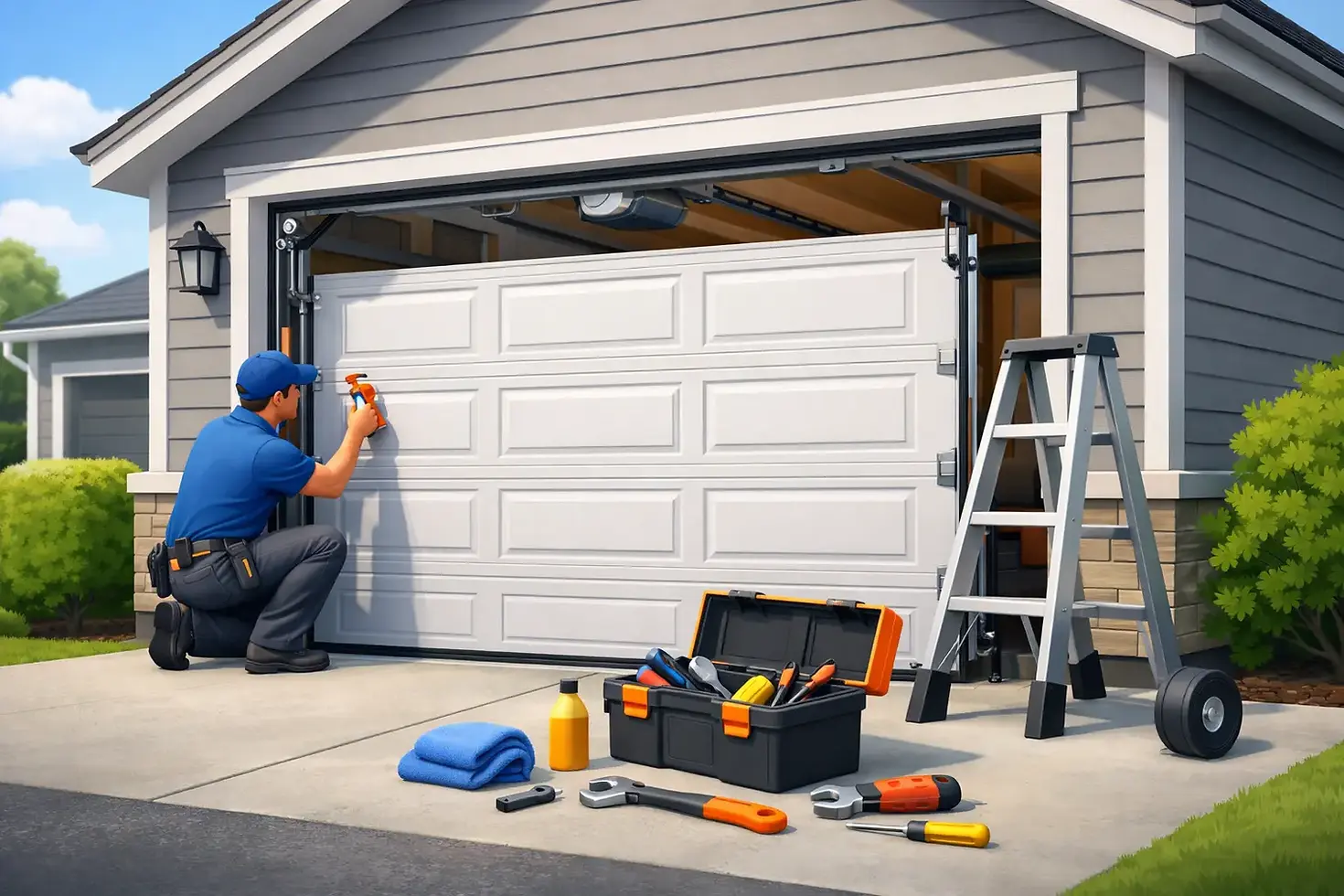
How to Maintain a Residential Garage Door

A garage door usually gets your attention only when it will not open at 7 a.m. or starts making a sound that wakes the house. A few routine checks can prevent many of those frustrating moments. Learning how to maintain a residential garage door helps protect one of the heaviest moving systems in your home, keeps daily access dependable, and can reveal small problems before they become urgent repairs.
For Tampa-area homeowners, maintenance also matters because heat, humidity, frequent rain, and salty air closer to the coast can speed up corrosion and wear. The goal is not to take apart the door or adjust dangerous components yourself. It is to keep the system clean, notice changes early, and know when a professional should step in.
How to Maintain a Residential Garage Door Month by Month
A simple monthly visual check takes only a few minutes. With the door closed, look at the springs, cables, rollers, tracks, hinges, brackets, and bottom seal. You are looking for obvious changes: rust, frayed cable strands, loose hardware, cracked rollers, bent track sections, or gaps under the door.
Do not assume a noisy door only needs lubricant. Noise can come from dry hinges, but it can also point to worn rollers, a loose bracket, a failing opener, or a door that is no longer properly balanced. A new grinding, popping, scraping, or squealing sound is worth investigating before it becomes a breakdown.
Watch the Door Through a Full Open-and-Close Cycle
Stand clear and operate the door with the wall button. Watch whether it moves evenly and stays level as it travels. The door should not jerk, shake heavily, drag along one side, or reverse without a clear reason.
Listen for where a sound starts. A click from the opener is different from a scrape along the track or a loud bang near the spring area. This basic observation gives a technician useful information if service is needed.
Never stand under a moving door, and keep children and pets away while testing. Do not try to catch a door that is dropping quickly. A door that feels unusually heavy or falls when disconnected from the opener needs professional attention right away.
Tighten Accessible Hardware Carefully
Normal use creates vibration, and vibration can loosen hinge bolts, roller brackets, and track supports over time. With the door closed, use a socket wrench to check accessible nuts and bolts on hinges and track brackets. Tighten hardware that is clearly loose, but do not overtighten it.
Leave any hardware connected to the torsion spring system alone. The brackets at the bottom of the door are under extreme tension because they anchor the lift cables. Removing or loosening those brackets can cause serious injury. If a cable is loose, off its drum, frayed, or broken, stop using the door and call for service.
Clean and Lubricate the Right Parts
Garage door maintenance is not about coating every moving part with oil. Too much product collects dust and grit, particularly in Florida's humid conditions. Use a garage-door-safe silicone or lithium-based lubricant sparingly on metal hinges, roller bearings if applicable, and springs. Wipe away excess product after application.
Avoid lubricating the tracks. Tracks need to stay clean so rollers can move through them without collecting grime. Instead, wipe the inside of each track with a dry or lightly damp cloth. If you see thick buildup, clean it gently and dry it thoroughly.
Nylon rollers may not need as much lubrication as steel rollers. If a roller is cracked, wobbly, or has a seized bearing, lubricant will not solve the problem. Replacement is usually the better fix.
Clean the Door and Protect the Bottom Seal
Wash the exterior of the garage door with mild soap and water a few times a year. This removes dirt, pollen, and residue that can affect paint and hardware. Rinse gently and avoid directing high-pressure water at weatherstripping, joints, or the opener.
Check the bottom seal while the door is closed. It should make even contact with the floor and help keep out rainwater, insects, leaves, and hot outdoor air. A hardened, torn, flattened, or missing seal can let moisture into the garage and make cooling nearby rooms more difficult.
If water enters below only one side of the door, the cause may be a worn seal, an uneven driveway, or a door that needs adjustment. Replacing a seal is straightforward in some cases, but persistent gaps should be checked so the underlying alignment issue is not missed.
Test Safety Features Every Month
Your automatic opener has safety systems that deserve regular attention. These tests are quick, but they should be taken seriously.
First, test the photo-eye sensors near the bottom of the tracks. Make sure both lenses are clean and facing each other. If the indicator lights are off or blinking, clean the lenses and check for an obstruction. Do not bend, bypass, tape over, or disable the sensors.
Next, test the auto-reverse setting. Place a piece of wood, such as a flat 2-by-4, on the floor in the door's path. Close the door using the opener. When the door contacts the object, it should reverse. If it does not, stop using the automatic function until an opener professional can inspect and adjust it.
Test the manual release only when the door is fully closed. Pull the emergency release cord, then lift the door by hand from a safe position. A properly balanced door should lift without extreme force and stay roughly in place when opened halfway. If it shoots upward, drops, or is very heavy, reconnect the opener and arrange service. Do not attempt to adjust springs to correct balance.
Know What Homeowners Should Not Repair
Some garage door tasks are appropriate for homeowners, including cleaning tracks, changing remote batteries, tightening accessible hardware, and checking safety sensors. Springs, cables, drums, and bottom brackets are not do-it-yourself repairs.
A broken spring may be visible as a gap in the coil above the door, but it can also show up as an opener that strains, a door that opens only a few inches, or a door that feels too heavy to lift. Continuing to run the opener against a broken spring can damage the opener and create a larger repair.
A thrown cable is another situation where the door should stay closed if possible. Do not force the opener or pull on the cable. The door may be unevenly supported and can bind or move unpredictably.
Call for professional service if you notice frayed cables, bent tracks, a damaged panel, a broken spring, a door that has come off track, or an opener that will not reverse correctly. These are safety concerns, not just inconveniences.
Build a Maintenance Routine That Fits Your Home
Most households can manage a basic monthly check, seasonal cleaning, and an annual professional tune-up. If your family uses the garage as the main entrance, the door may cycle several times a day and benefit from more frequent attention. Older doors, wood doors, and doors exposed to coastal air may also need closer monitoring.
Keep a small note on your phone with the date you lubricated the moving parts, replaced remote batteries, or noticed a new sound. That record makes changes easier to spot and helps avoid the common problem of waiting until the door fails completely.
When a garage door starts acting differently, early service is usually safer and less disruptive than waiting for the next morning when the car is trapped inside. Supreme Garage Door LLC provides practical residential service for homeowners who need a clear answer, careful workmanship, and dependable help when a door no longer operates as it should.


Comments